LIVING IN A MODERN WORLD
We live in an age that is very good at telling us what to do next. It's less good at helping us pause long enough to understand what we're already doing.
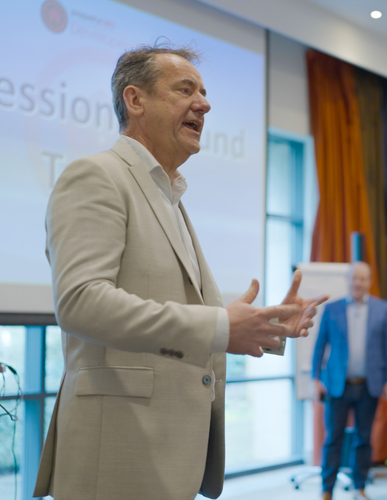
Through his books and articles, Ian Child explores everyday modern life - how attention is used, how time is experienced, and why so many capable people feel quietly overwhelmed or dissatisfied without quite knowing why


ABOUT IAN CHILD
Ian spent much of his working life in environments that reward speed, certainty, and performance. His career has included senior roles in corporate financial services, the building of a seven-figure start-up business, and years spent training and mentoring others.
He is not concerned with providing techniques or quick solutions. Instead, his work pays attention to patterns that are easy to overlook, assumptions that quietly shape behaviour, and the difficulty of creating enough space to think clearly in a world that rarely slows down.
His writing is reflective rather than prescriptive. It is intended for readers who are curious about how contemporary life is actually lived and felt, rather than how it is described, optimised, or supposed to be experienced.
NOTES ON MODERN LIFE
Ian’s recent writing is organised as Notes on Modern Life, an ongoing series of short books that explore the quieter pressures of contemporary life.
Each book focuses on a single aspect of modern experience that tends to operate in the background, shaping behaviour, mood, and self-perception with very little discussion. The books are deliberately short, designed to stand alone, and written to leave some space rather than fill it.

EARLIER WORK
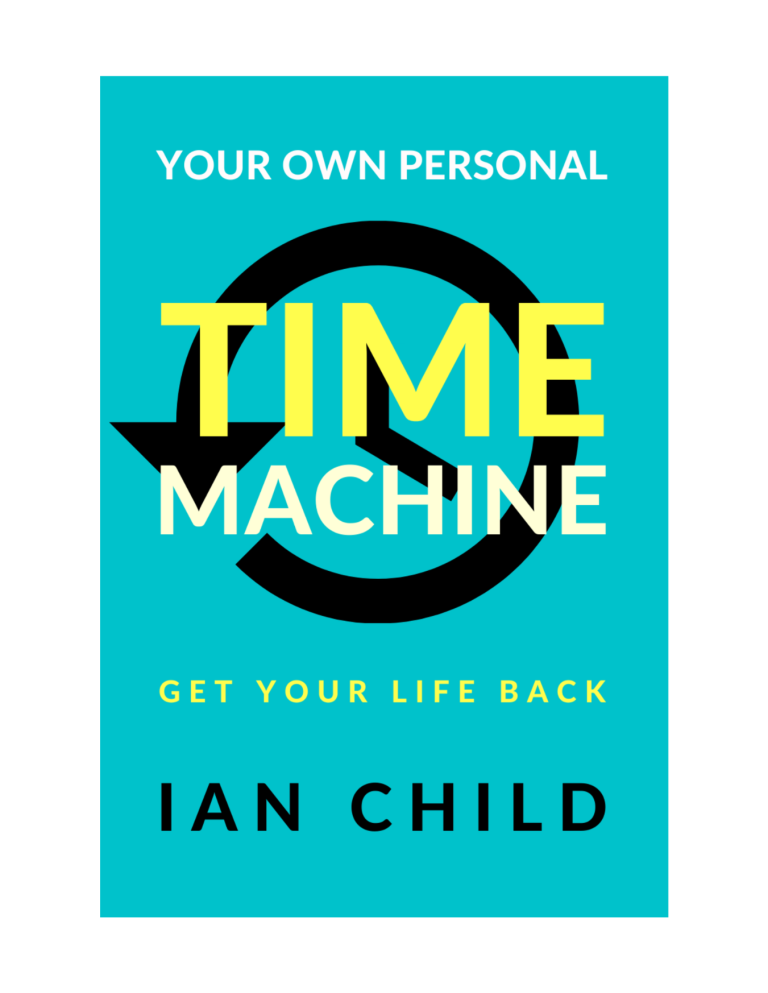
Ian’s first book, Your Own Personal Time Machine, is a standalone exploration of time, attention, and lived experience. It lays much of the groundwork for the questions developed more fully in his latest series, Notes on Modern Life.
RELATED WORK
Alongside his books, Ian Child occasionally speaks or writes on related themes, often in conversational or interview formats. This material is referenced where it adds context, rather than maintained as a separate archive.